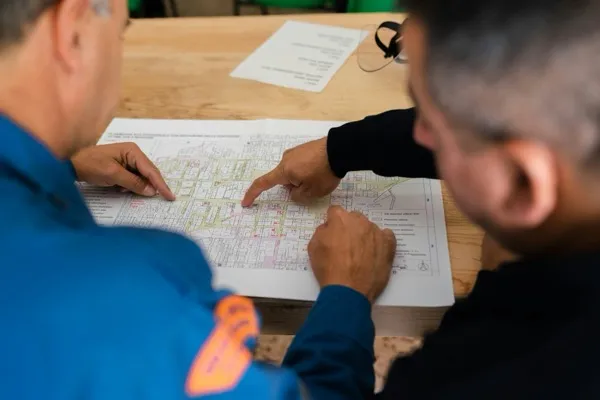

A well-structured request for proposal decides which contractors bid, what they price, and how much room you have to hold them to it— and most owners write it last, after everything else on the project is already set. Vague scope definitions and misaligned evaluation criteria are the leading causes of cost overruns and contractor disputes. The Federal Highway Administration puts it bluntly: "Significant cost overruns occur when scope was not clear in the RFP and the contracting agency must modify the contract after award."1
That finding isn't limited to highway projects. Every construction RFP that ships with ambiguous scope or mismatched criteria is an invitation for change orders, schedule delays, and strained contractor relationships. Risk, as FHWA research1 also notes, "is best delegated to the party that is in the best position to manage, control or mitigate a given risk." Your RFP is where that delegation happens— or fails to.
Most construction RFP guides focus on templates and step-by-step processes. This one takes a different approach. We'll cover the essential elements, construction-specific requirements (bonding, insurance, safety), evaluation strategies that go beyond lowest price, common mistakes on both sides of the table, and where AI is starting to show up in the proposal process. The audience: AEC firm leaders making decisions about contractor selection, not procurement clerks filling out forms.
Before writing an RFP, the first question is whether an RFP is the right selection method for your project.
When to Use an RFP vs. Alternative Selection Methods
An RFP is the right approach when your project has a well-defined scope, multiple qualified firms could compete, and you need transparency in the selection process. For complex design work, specialized trades, or integrated delivery, alternative methods like qualifications-based selection or design-build may produce better outcomes.
Understanding the distinctions matters. An RFP (Request for Proposal) solicits detailed proposals evaluated against stated criteria— price, approach, qualifications. An RFQ (Request for Qualifications) screens firms on capability first, then shortlists before issuing the full RFP4. A Statement of Work (SOW), by contrast, is developed after contract award to guide execution— it's not a selection tool3.
The standard RFP process follows seven steps: project definition, RFP development, distribution, bid preparation, submission, evaluation, and contract negotiation2. But the process itself matters less than choosing the right method for your situation. A design-build project, for example, integrates design and construction under a single contract— the owner gives up detailed design control in exchange for faster delivery and single-source accountability.
| Selection Method | Best When | Not Ideal When | Example |
|---|---|---|---|
| Competitive RFP | Scope is clear; multiple qualified bidders exist; transparent evaluation required | Design is incomplete; highly specialized work; trusted long-term partner available | New commercial building with standard specs |
| RFQ → RFP (Two-Stage) | Large pool of potential bidders needs filtering | Small market with few qualified firms | Public infrastructure requiring prequalification |
| Design-Build | Owner wants single point of responsibility; fast-track delivery | Owner needs full control over design details | Fast-track mixed-use development |
| Negotiated/Sole-Source | Specialized expertise required; existing trusted relationship | Public accountability or competitive transparency needed | Specialty restoration or historic preservation |
The decision tree is straightforward: the right procurement method depends on scope clarity, the number of qualified firms, and your transparency requirements. If you have clear scope and want competitive pricing, use an RFP. If design is still evolving or you need creativity in the solution, consider qualifications-based selection or design-build. If only one firm can do the work, negotiate directly and save everyone the theater.
Once you've confirmed an RFP is the right approach, the next step is getting the content right.
10 Essential Elements Every Construction RFP Must Include
An effective construction RFP includes 10 key elements: purpose and intent, project overview, scope of work, timeline, budget parameters, evaluation criteria, submission guidelines, known challenges, required qualifications, and supporting appendices5. Missing any of these creates ambiguity that leads to mismatched proposals and costly change orders.
The 10 elements:
- Purpose and Intent. State why you're issuing the RFP and what outcome you're seeking. One sentence of clarity here saves pages of confusion later.
- Project Overview. Provide context: project type, location, owner background, and any relevant history.
- Scope of Work. The highest-stakes section. Ambiguity here is where cost overruns originate1. Define deliverables, exclusions, and boundaries with precision.
- Timeline. Include both the RFP response deadline and key project milestones. Contractors need both to assess feasibility.
- Budget Parameters. Specify a range or ceiling. Silence on budget forces contractors to guess— and many guess wrong.
- Evaluation Criteria. State how proposals will be judged. Contractors deserve to know the scoring rubric before they invest an average of 33 hours in a response13.
- Submission Guidelines. Format, page limits, required sections, delivery method, and contact for questions.
- Known Challenges. Site conditions, permitting issues, logistics constraints. Transparency here builds trust and produces more accurate bids.
- Required Qualifications. Licenses, certifications, bonding capacity, insurance minimums, and relevant experience requirements.
- Appendices. Drawings, specifications, geotechnical reports, site surveys, and any existing studies.
The scope of work deserves extra attention. FHWA research1 documents that the most significant cost overruns occur when scope is unclear and the contracting agency must modify the contract after award. And a well-crafted request for proposal is the most important project management document your team will produce. Write your scope as if the contractor will hold you to every word. They will.
Several of these elements are unique to construction and deserve deeper attention.
Construction-Specific Requirements: Bonding, Insurance, and Safety
Construction RFPs require bonding, insurance, and safety documentation that service industry RFPs don't— and omitting these from your RFP creates legal and financial exposure. Federal projects under the Miller Act mandate both performance and payment bonds6. Most state and municipal projects have similar requirements above certain dollar thresholds.
Bonding is the first construction-specific requirement most owners encounter. Three types matter:
- Performance bonds guarantee the contractor will complete the work per contract terms
- Payment bonds protect subcontractors and suppliers from non-payment
- Bid bonds prevent contractors from withdrawing their proposal after submission
Insurance requirements are equally non-negotiable. General liability coverage of at least $1 million per occurrence is a common requirement, though minimums vary by jurisdiction7. Your RFP should also require workers' compensation coverage and, for projects involving design work, professional liability insurance.
Safety documentation separates serious contractors from the rest. Request OSHA 300 logs, the contractor's Experience Modification Rate (EMR), and their written safety program. A typical prequalification package from a major developer can run 150+ questions and require three years of audited financials along with these safety records8.
| Requirement Type | What to Ask For | Why It Matters |
|---|---|---|
| Bonding | Performance bond, payment bond, bid bond | Protects against default, ensures subcontractor payment |
| Insurance | GL ($1M+), workers' comp, professional liability | Transfers financial risk from owner to contractor |
| Safety | OSHA 300 logs, EMR, safety program | Predicts on-site safety performance |
| Financial | 3 years audited financials, bonding capacity letter | Confirms contractor can sustain the project financially |
| Certifications | DBE/MBE/WBE documentation, LEED credentials | Meets regulatory and sustainability requirements |
Don't overlook diversity and sustainability requirements. DBE (Disadvantaged Business Enterprise) certification requires at least 51% ownership by socially and economically disadvantaged individuals9. Projects with DBE/MBE/WBE participation goals require bidders to either meet the goal or submit Good Faith Effort documentation10. Some jurisdictions— like New York City under Local Law 86— mandate LEED certification for public buildings exceeding $2 million in construction costs11. If your project has public funding, these aren't nice-to-haves. They're bid requirements.
With requirements defined, the next critical decision is how to weight and evaluate the proposals you receive.
Evaluating and Scoring Construction RFP Responses
Best-value evaluation— typically weighting qualifications at 75% and cost at 25%— consistently produces better project outcomes than lowest-price selection12. For any request for proposal in project management, the key is defining criteria that reflect actual project priorities, then scoring them transparently before you open proposals.
Five criteria form the backbone of construction proposal evaluation2. Get the weighting wrong and you'll spend weeks evaluating proposals on factors that don't predict project success:
| Evaluation Criteria | Typical Weight | What to Assess |
|---|---|---|
| Relevant Experience | 25–30% | Similar project types, scale, and complexity in past 5 years |
| Team Qualifications | 15–20% | Key personnel resumes, certifications, availability |
| Approach/Methodology | 15–20% | Project plan, schedule logic, risk mitigation strategy |
| Cost Proposal | 20–25% | Total price, unit prices, allowance handling, value engineering |
| Financial Stability | 10–15% | Bonding capacity, audited financials, banking references |
Prequalification is your first filter. Before issuing a full RFP, use an RFQ stage to shortlist firms based on minimum qualifications. The AIA recommends Form A305-2020 (Contractor's Qualification Statement) as the standard prequalification document4. Typical prequalification reviews experience from the past five years or the 20 most recent comparable projects14.
Win rates tell an uncomfortable truth. Cross-industry data suggests incumbents win 60–90% of repeat bids, while cold bidders win 15% or less13. But that doesn't mean you should skip competitive bidding. It means relationship and track record carry more weight than most selection committees admit. If you want to diversify your contractor pool, build in mechanisms for new firms to demonstrate capability beyond their bid documents.
Even with strong criteria, the most common RFP failures come from avoidable mistakes on both sides.
Common RFP Mistakes That Cost Owners and Contractors
The most damaging RFP mistakes happen before a single proposal is submitted: vague scope definitions, unrealistic timelines, and evaluation criteria that don't match actual priorities. On the contractor side, generic boilerplate responses and chasing projects that aren't a good fit waste time and hurt win rates.
Owners undermine RFPs with vague scope; contractors undermine responses with recycled boilerplate. Both problems are preventable.
Owner Mistakes
Owners sabotage their own process more often than they realize16:
- Vague scope definitions that force contractors to guess, then generate change orders when the guess is wrong
- Unrealistic timelines and budgets that attract desperate bidders, not qualified ones
- Changing requirements mid-process that erode trust and make comparison impossible
- Mismatched evaluation criteria that score for one thing but care about another
- Not involving stakeholders early enough, leading to late-stage scope revisions
Contractor Mistakes
Contractors have their own patterns15:
- Overreliance on boilerplate. Reviewers can spot recycled proposals instantly17
- Pursuing wrong-fit projects. The average RFP response takes 33 hours13. Spending that time on a 15% probability opportunity is a poor investment
- Ignoring submission requirements. Page limits, required sections, format specifications. Non-compliance is the fastest path to disqualification
- Starting deliverables too late. A response for a medium-sized construction project takes at least two weeks to do well16
- Missing differentiation. Value engineering suggestions can win more bids than many contractors realize18
The timeline problem deserves its own emphasis. Owners who set unrealistic deadlines attract contractors who cut corners on their responses. And contractors who wait until the last week to start working on a response produce generic proposals. Both lose.
AI is starting to change how construction firms write and evaluate proposals.
How AI Is Changing Construction RFP Response
AI-powered RFP tools are entering the construction industry, with vendors claiming 60–80% reductions in response time through automated drafting and knowledge retrieval19. For owners evaluating proposals, this means understanding when a polished response reflects genuine capability and when it reflects good automation.
The technology behind most of these tools is Retrieval-Augmented Generation (RAG)— a method where AI pulls from a company's past proposals, project data, and qualification documents to generate context-specific responses19. In practical terms, the tool drafts a first pass using your historical wins— not generic templates. Tools like Steerlab, Responsive, and Inventive AI are marketing specifically to construction and engineering firms. The pitch is compelling: organize historical proposal data, flag missing requirements, and draft first-pass responses automatically.
But here's the both/and reality. AI handles administrative proposal tasks well— organizing data, checking compliance, maintaining consistency across sections. Cross-industry research suggests that organizations reducing time on administrative tasks see 15–25% higher win rates13. That's real. What AI doesn't do is replace the strategic judgment that determines whether a project is worth pursuing, how to differentiate your approach, or which team members to assign.
For owners, this means your evaluation process needs to go deeper than prose quality. A well-automated response looks polished. So does a well-qualified contractor. The difference shows up in specificity: references to your actual project conditions, named personnel with relevant experience, and a project approach that addresses your stated challenges— not generic best practices. If you're exploring AI strategy for your organization and wondering how it might extend beyond proposals into broader operations, the same principle applies. AI amplifies human capability. It doesn't replace the thinking.
For firms exploring AI automation in construction workflows or developing an AI governance framework, RFP response is one of many operational areas where the technology is maturing.
Frequently Asked Questions
What is the difference between an RFP and a Statement of Work (SOW)?
An RFP is issued before contract award to solicit proposals from potential contractors3. A Statement of Work is developed after award to define execution details. The RFP describes what you want built; the SOW describes how it will be built. Don't confuse the two— they serve different stages of the procurement lifecycle.
How long should contractors have to respond to a construction RFP?
Allow a minimum of two weeks for medium-sized construction projects16. Contractors need time for site visits, subcontractor coordination, and insurance and bonding verification. Cross-industry data shows the average RFP response takes 33 hours13, and that time is typically spread across multiple team members over several business days. Unrealistic deadlines discourage qualified firms and attract desperate ones.
Should we require prequalification before issuing an RFP?
Yes. A prequalification stage (RFQ) filters contractors by minimum qualifications— experience, bonding capacity, safety record, financial stability— before you invest time evaluating detailed proposals. The AIA recommends using Form A305-2020 for contractor qualification4. Prequalification typically reviews the past five years of relevant project experience14.
What percentage should price count in RFP evaluation?
Industry best practice weights qualifications at approximately 75% and cost at 25% for best-value selection12. Lowest-price selection often leads to quality issues, change orders, and schedule delays. Adjust the weighting based on project complexity and risk tolerance, but don't let price dominate the decision.
Do construction RFPs require bonding?
Federal projects require performance and payment bonds under the Miller Act6. Most state and municipal projects have similar requirements above certain dollar thresholds. Even for private projects, requiring bonds protects against contractor default and ensures subcontractor payment. The cost of bonding is minimal compared to the financial exposure of an uninsured contractor failure.
Better RFPs Build Better Projects
Your construction RFP is the strategic foundation for every decision that follows. The time invested in clear scope, appropriate evaluation criteria, and construction-specific requirements pays dividends in contractor quality, cost predictability, and project outcomes. The alternative— vague scope, mismatched criteria, cost overruns— is what FHWA has been documenting for decades.
This isn't a one-time fix. The best construction firms treat their RFP process as an organizational capability that improves with each project. Review what worked. Track which evaluation criteria predicted actual performance. Refine your templates based on real outcomes, not theoretical best practices.
For firms looking to bring that same strategic discipline to their technology adoption— whether it's building an AI implementation roadmap or measuring the success of digital initiatives— the approach is the same. Start with clear requirements, evaluate based on outcomes, and build institutional knowledge over time. If mapping the right tools to your workflows feels like a full-time job on its own, a technology implementation partner can help you work through that process.
References
- FHWA, "Major Lessons Learned - Design-Build Practices" — https://www.fhwa.dot.gov/construction/contracts/pubs/dbpractice/21.cfm
- Procore, "RFPs in Construction: Preparing & Responding to a Request for Proposals" (2026) — https://www.procore.com/library/rfp-construction
- Hinz Consulting, "RFP vs. SOW: Key Differences and When to Use Each" — https://hinzconsulting.com/rfp-vs-sow/
- AIA, "Request for Qualifications (RFQ) - What Are They Used For?" (2021) — https://learn.aiacontracts.com/articles/request-for-qualifications-what-are-they-used-for/
- ProQ Smart, "10 Key Elements Every Construction Request for Proposal Should Include" (2026) — https://proqsmart.com/blog/10-key-elements-every-construction-request-for-proposal-rfp-should-include/
- FAR, "Part 28 - Bonds and Insurance" — https://www.acquisition.gov/far/part-28
- NYC Department of Buildings, "Project Requirements: Contractor Permit & Insurance" — https://www.nyc.gov/site/buildings/dob/project-requirements-contractor-permit-and-insurance.page
- Construction Procurement Sources, "Contractor Prequalification Questionnaire: Complete Guide" (2026) — https://constructionbids.ai/blog/contractor-prequalification-questionnaire-guide
- US Department of Transportation, "Disadvantaged Business Enterprise (DBE) Program" — https://www.transportation.gov/civil-rights/disadvantaged-business-enterprise
- Multiple State Sources, "MBE/WBE/DBE Participation Goals" — https://dedi.ri.gov/division-units/minority-business-enterprise-compliance-office/faqs
- NYC Office of Environmental Coordination, "Green Building Requirements" — https://www.nyc.gov/site/oec/green-building/green-building-requirements.page
- ProQ Smart, "How to Evaluate and Score Construction RFP Responses" (2026) — https://proqsmart.com/blog/how-to-evaluate-and-score-construction-rfp-responses-a-guide-for-project-owners/
- Loopio, "38 Statistics on RFP Win Rates & Proposal Management" (2026) — https://loopio.com/blog/rfp-statistics-win-rates/
- Multiple Sources, "Contractor Prequalification Questionnaire" (2026) — https://www.bentley.edu/offices/procurement/construction-contractors-prequalification-questionnaire
- Procore, "12 Common RFP Mistakes (and How to Avoid Them)" (2026) — https://www.procore.com/library/common-rfp-mistakes
- ProQ Smart, "How to Write a Winning RFP Response for Construction Projects" (2026) — https://proqsmart.com/blog/how-to-write-a-winning-rfp-response-for-construction-projects-a-step-by-step-guide/
- WinVale, "5 Common RFP Mistakes Contractors Make and How to Avoid Them" (2026) — https://info.winvale.com/blog/7-common-rfp-mistakes-that-you-can-and-should-avoid
- Construction Bidding Resources, "Five Key Components of Successful Construction Bid" (2026) — https://network.demandstar.com/blogs/5-key-components-of-successful-construction-bid/
- Bidara/Steerlab/Inventive AI, "RFP Response Automation Guide 2026" (2026) — https://www.bidara.ai/guides/rfp-response-automation