
AI construction estimating software cuts bid preparation time in half and improves accuracy by over 20%, according to peer-reviewed research. Those are measured results from firms already using these tools, and the market for that software is growing at nearly 25% annually as more contractors buy it.
Here's the gap, though. 94% of construction firms plan to increase AI investment, but only 27% currently use it. That disconnect means most firms know they need to move— they just don't know which tool fits their operation.
This guide closes that gap. We compare the top AI in construction estimating platforms for 2026, break down the real ROI numbers, and cover the implementation realities most comparison guides conveniently skip. Whether you're a 10-person remodeler or a 200-person GC, you'll walk away knowing which tool deserves your trial run.
But understanding what these tools do— and which one fits your operation— requires looking beyond the marketing.
How AI Construction Estimating Works
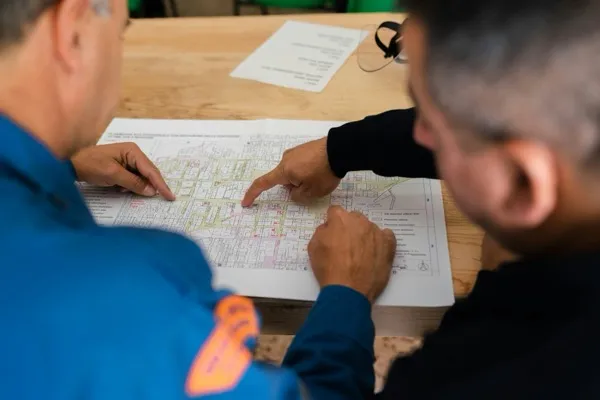
AI construction estimating software uses computer vision and machine learning to automatically detect, measure, and quantify building components from digital blueprints— replacing hours of manual takeoff work with minutes of automated analysis. Think of it as adding a tireless junior estimator to your team who never miscounts a window.
But it's not magic. The technology comes in two main flavors. Pure computer vision tools like Togal.AI and Kreo scan your plans and identify components automatically— STACK's AI Assist1, for example, detects doors, windows, rooms, and walls from blueprints without manual input. Hybrid models like Beam AI combine AI processing with human expert review, delivering finished estimates rather than raw takeoff data.
Most of these platforms run in the cloud. Cloud deployment holds 66.78% market share2 in AI construction, which means you're accessing tools through a browser— no heavy local installations. That also enables BIM integration for automated quantity extraction3 from 3D models, where "you can see exactly what assets the numbers are tied to."
What AI handles well versus where human judgment still matters:
AI automates:
- Quantity takeoff from blueprints (area, linear, count measurements)
- Component detection (doors, windows, walls, rooms)
- Historical cost database lookups
- Repetitive measurement across similar plan sets
Humans still own:
- Pricing strategy and competitive bid positioning
- Local condition adjustments (site access, labor availability, weather)
- Risk assessment and contingency planning
- Client relationship management and scope negotiation
Here's what matters: AI could automate up to 49% of construction tasks2. But the other 51%— the judgment calls that win bids— still belongs to experienced estimators.
With that foundation, here's how the leading platforms stack up.
Top AI Construction Estimating Software Compared
The top AI construction estimating tools in 2026 range from $35/month budget options to enterprise-grade systems, with the strongest performers clustering between $149-$299/month for mid-market contractors. Here's what each brings to the table.
Togal.AI — Best for Takeoff Accuracy
Togal.AI claims 98% accuracy4 on floor plan takeoffs, and independent testing backs the performance— Robotics & Automation News found it completed a full architectural takeoff in 12 minutes5. That's not a demo. That's a timed benchmark on real plans.
The Growth Plan runs $299/month per user6 billed yearly, with unlimited takeoffs, chat prompts, and image searches included. Business plans for teams of 4+ require custom pricing.
Best for: Mid-size GCs and subcontractors doing 50+ estimates per year who need dedicated takeoff accuracy and speed.
Handoff AI — Best All-in-One for Residential and Remodeling
Handoff AI starts at $149/month7 and goes beyond takeoff— it includes CRM, proposal generation, and invoicing in a single platform. AI estimates work from PDFs, voice descriptions, and text input, trained on 100,000+ residential projects and 60M+ SKUs.
The vendor reports estimates coming within $100 of manually prepared bids8 for residential work. That's a vendor claim, worth noting— but compelling for remodelers doing high-volume small bids.
Best for: Residential remodelers and small contractors who want estimating, CRM, and construction bid software in one platform.
STACK — Best for General Contractors
STACK's entry plan ranges from $1,899-$2,999 per year9, positioning it as a mid-range option with serious capability. STACK Assist AI automatically detects doors, windows, rooms, and walls1 from blueprints, and the platform integrates with major ERP and accounting systems.
Independent testing matters here. STACK achieved accuracy within 3% of baseline5 in the same Robotics & Automation News evaluation— validated numbers, not marketing copy. A free 7-day trial lets you test with up to 2 real projects.
Best for: General contractors needing a full preconstruction workflow with proven accuracy and construction accounting software integrations.
Kreo — Best Budget Option
At $35/month with Caddie AI10, Kreo is the lowest entry point for AI-assisted estimating. The platform handles automated detection and measurement across 2D and 3D workflows, with a chat-based refinement interface that lets you adjust results conversationally.
No independent accuracy testing is publicly available for Kreo, so treat vendor claims with appropriate skepticism. But at this price point, the risk of trialing is minimal.
Best for: Small contractors wanting to experiment with AI takeoff at the lowest possible cost.
Beam AI — Best Service-Based Model
Beam AI takes a fundamentally different approach. Instead of handing you software to learn, they deliver custom estimates within 2-3 days11, "fully aligned to your internal formats." Human experts review every output.
The numbers are noteworthy: 15-20 hours saved per week and the ability to bid 3-5x more projects11 according to the vendor. Accuracy claims sit at ±1% of in-house takeoffs. Custom pricing means you're paying per project rather than per seat.
Best for: Firms that want AI-powered results without learning new software— especially during bid surges when capacity matters more than monthly cost.
Honorable Mentions
Several other platforms deserve attention depending on your specialty:
- ProEst (Autodesk) — Enterprise-grade estimating with BIM integration, cost databases, and the Autodesk ecosystem behind it. Custom pricing.
- Buildxact — Named U.S. News & World Report 2023 best overall; users report completing estimates up to 7x faster with AI assistant "Blu."
- ConEst IntelliBid — Electrical specialty with 140,000+ items and 500,000+ pre-built assembly kits. The go-to for electrical contractors.
- CountBricks — Voice-based project descriptions for instant estimates with detailed materials and local pricing.
- TaksoAi — Mechanical plan specialist processing most plans in under 15 minutes.
Comparison Table
| Platform | Starting Price | Best For | AI Approach | Independent Accuracy Data |
|---|---|---|---|---|
| Togal.AI | $299/mo | Mid-size GCs, subcontractors | Computer vision takeoff | 12-min takeoff; tested by R&A News |
| Handoff AI | $149/mo | Residential, remodeling | AI + full business suite | Vendor: within $100 of manual bids |
| STACK | ~$158-250/mo | General contractors | AI Assist + manual workflow | Within 3% baseline; R&A News tested |
| Kreo | $35/mo | Budget-conscious firms | Caddie AI detection | N/A |
| Beam AI | Custom | Firms wanting service model | Human + AI hybrid | ±1% of in-house (vendor claim) |
Features and pricing matter, but the real question is whether these tools pay for themselves— and how fast.
ROI and Time Savings — What the Data Shows
Construction firms using AI estimating tools save 6-10 hours per estimate12 and typically see full ROI payback within 3-6 months12, with small firms (5-50 people) freeing an estimated 260 hours annually12. Those aren't abstract projections. That's recaptured capacity you can point at revenue.
The headline number: AI reduces estimation completion time by 51.3%12 on average. Pair that with a 20.4% improvement in accuracy12, and you're not just faster— you're producing better bids with fewer costly rework cycles and change orders.
Here's the practical math:
ROI formula: (hours saved per estimate × estimator hourly rate × estimates per year) – annual tool cost = net annual ROI Example: 100 estimates/year × 6 hours saved × $75/hour = $45,000 recaptured capacity – $3,600/year tool cost = $41,400 net annual ROI
Beyond raw time savings, AI improves coordination across estimating workflows by 28.4%12. In practical terms: fewer email chains between your field team and estimators about what's on the plans, fewer missed scope items that surface mid-bid, and fewer change orders eating your margin after award. Less rework. Fewer surprises.
The competitive angle matters too. Tech-forward construction firms project 20%+ profit margins at a 67% rate versus 52% for non-adopters8. And AI estimating achieves less than 5% variance from actual project costs12 on bid day— the kind of precision that protects margins on tight bids.
These numbers assume clean implementation— which brings us to the part most software guides skip.
Implementation Reality Check — What Most Guides Don't Tell You
Data quality issues derail 40% of AI implementations13 in construction, and the biggest predictor of success isn't the tool you choose— it's whether your historical project data is clean enough for AI to learn from. This is the part that earns your trust, because most comparison guides pretend implementation is just clicking "sign up."
The adoption gap tells the story. 45% of construction firms report no AI implementation at all, with another 34% in early pilot phases13. Why? Because as Monograph's research12 puts it, "AI implementations typically fail because firms skip establishing clean historical project data." Your data is the source of truth— garbage in, garbage out.
Cost barriers of $500-$5,000/month13 also deter smaller firms. But the bigger hidden cost of AI projects isn't the subscription— it's the setup time nobody budgets for.
Set realistic expectations: 85-90% accuracy is typical5 across AI estimating tools out of the box. That improves as the system trains on your specific project types. Plan for progress, not perfection.
Pre-implementation checklist:
- Digitize your plans. If you're still working from paper blueprints, start scanning and organizing digitally before evaluating any AI tool.
- Clean your historical data. Standardize how you've tracked past projects— costs, quantities, materials, and labor hours.
- Assign an internal champion. Someone on your team needs to own the rollout, run training, and troubleshoot the first 30 days.
- Set an accuracy baseline. Run your current estimating process on 3-5 recent projects so you have real numbers to compare AI output against.
- Plan a parallel running period. Run AI estimates alongside manual estimates for 4-8 weeks before trusting AI output alone.
With implementation realities in mind, here's how to narrow your shortlist.
How to Choose the Right AI Estimating Tool for Your Firm
The right AI estimating tool depends on three factors: your firm size and estimate volume, whether you need standalone takeoff or a full business suite, and how much implementation support your team requires. A 10-person remodeling firm doing 200 small bids per year needs a completely different tool than a 150-person GC bidding 30 large commercial projects.
Start with your profile:
| Your Profile | Best Starting Point | Why |
|---|---|---|
| Small residential remodeler (<20 people) | Handoff AI or Buildxact | All-in-one, low learning curve, residential training data |
| Budget-conscious contractor | Kreo | $35/mo entry, solid AI detection |
| Mid-size GC (20-100 people) | STACK or Togal.AI | Feature depth, proven accuracy, integrations |
| Don't want to learn new software | Beam AI | Service model, expert review, Excel delivery |
| Electrical specialty | ConEst IntelliBid | 140K+ items, trade-specific assembly kits |
| Mechanical specialty | TaksoAi | Mechanical plan specialist, under 15 minutes |
| Enterprise (100+ people) | ProEst (Autodesk) | BIM integration, cost databases, Autodesk ecosystem |
Before committing, ask yourself these four questions:
- How many estimates does your team produce per month? High volume favors self-service AI (Togal, STACK). Low volume might favor the service model (Beam AI).
- Do you need CRM and invoicing, or just takeoff? If just takeoff, don't pay for a full suite. If you want everything in one place, Handoff or STACK make sense.
- Is your team comfortable learning new software? Be honest. Beam AI exists specifically for firms that want results without the learning curve.
- What's your realistic budget per user per month? The broader market ranges from $275-$950/user/month14 for full-featured platforms— but AI-focused tools can be more competitive.
Most platforms offer demos or trials. And most give you enough room to run a real test. STACK offers a 7-day free trial9 with up to 2 projects. Run the same project through 2-3 tools and compare. The numbers don't lie.
These are the questions contractors ask most when evaluating these tools.
FAQ — AI Construction Estimating Software
How accurate is AI construction estimating software?
Most AI estimating tools achieve 85-90% accuracy5 out of the box, with top performers like Togal.AI claiming 98%4 on floor plan takeoffs. Independent testing shows more grounded results: InEight Estimate came within 1.8% of ground-truth5 and STACK within 3% of baseline5. Accuracy improves as the system learns from your specific project types and historical data.
How much does AI construction estimating software cost?
Pricing ranges from $35/month (Kreo)10 to $299/month per user (Togal.AI Growth Plan)6, with enterprise platforms like ProEst15 requiring custom quotes. Mid-market contractors should budget $150-$300/month per user for full-featured AI estimating. STACK falls at $1,899-$2,999/year9, and Handoff AI starts at $149/month7.
How long does it take to implement AI estimating software?
Most cloud-based tools can be set up in 1-2 weeks, but reaching full productivity typically takes 4-8 weeks as teams learn workflows and the AI trains on your project types. The biggest time investment is preparing historical data12— firms with clean digital records adopt faster. ROI payback typically occurs within 3-6 months12 for firms actively bidding.
Can AI estimating software replace human estimators?
No. AI automates repetitive measurement tasks and improves accuracy, but experienced estimators still handle pricing strategy, risk assessment, local condition adjustments, and client relationships. AI could automate up to 49% of construction tasks2— but the other 51% requires human expertise. The best results come from AI handling volume work while your people focus on the judgment calls that win bids.
Does AI estimating software work with BIM?
Yes. Platforms like ProEst (Autodesk)15 offer direct BIM integration for automated quantity extraction from 3D models3. BIM integration enables visual verification— you can see exactly what the numbers are tied to— reducing errors and improving collaboration between estimating and design teams.
Your Next Steps
The best AI construction estimating software for your firm depends on your size, trade specialization, and estimate volume— but the data is clear that firms adopting these tools gain a measurable edge in both speed and accuracy.
Here's your three-step evaluation plan:
- Define your profile. Use the decision matrix above to narrow your shortlist to 2-3 tools that match your firm size, trade, and workflow needs.
- Run parallel trials. Put the same real project through each tool and compare the output against your manual estimates. Trust the numbers.
- Measure against baseline. Track time saved, accuracy improvements, and team adoption over the first 90 days.
But remember: clean data, a dedicated champion, and realistic timelines separate the firms that get ROI from the ones that cancel after 60 days.
If mapping AI estimating tools to your workflows feels like a project in itself, that's where we come in. We help firms match the right tools to their operations— no vendor bias, just honest guidance. Start with a strategy conversation →
Construction firms that adopt AI estimating today aren't just saving time— they're positioning themselves on the right side of a market growing from $4.86 billion to $35.53 billion by 20342. Early adopters are already seeing the returns. The tools are ready— and most offer trials, so the cost of exploring is low.
References
- 1. stackct.com
- 2. fortunebusinessinsights.com
- 3. prediction3d.com
- 4. togal.ai
- 5. roboticsandautomationnews.com
- 6. togal.ai
- 7. handoff.ai
- 8. handoff.ai
- 9. stackct.com
- 10. kreo.net
- 11. ibeam.ai
- 12. monograph.com
- 13. constructiondive.com
- 14. softwareadvice.com
- 15. construction.autodesk.com